
In the startup ecosystem (increasingly in the high-pressure world of private equity) there is a dangerous glorification of the “Grind.” Founders wear sleep deprivation like a badge of honor. We treat our bodies as an afterthought, a mere vehicle that carries our brain from one meeting to the next.
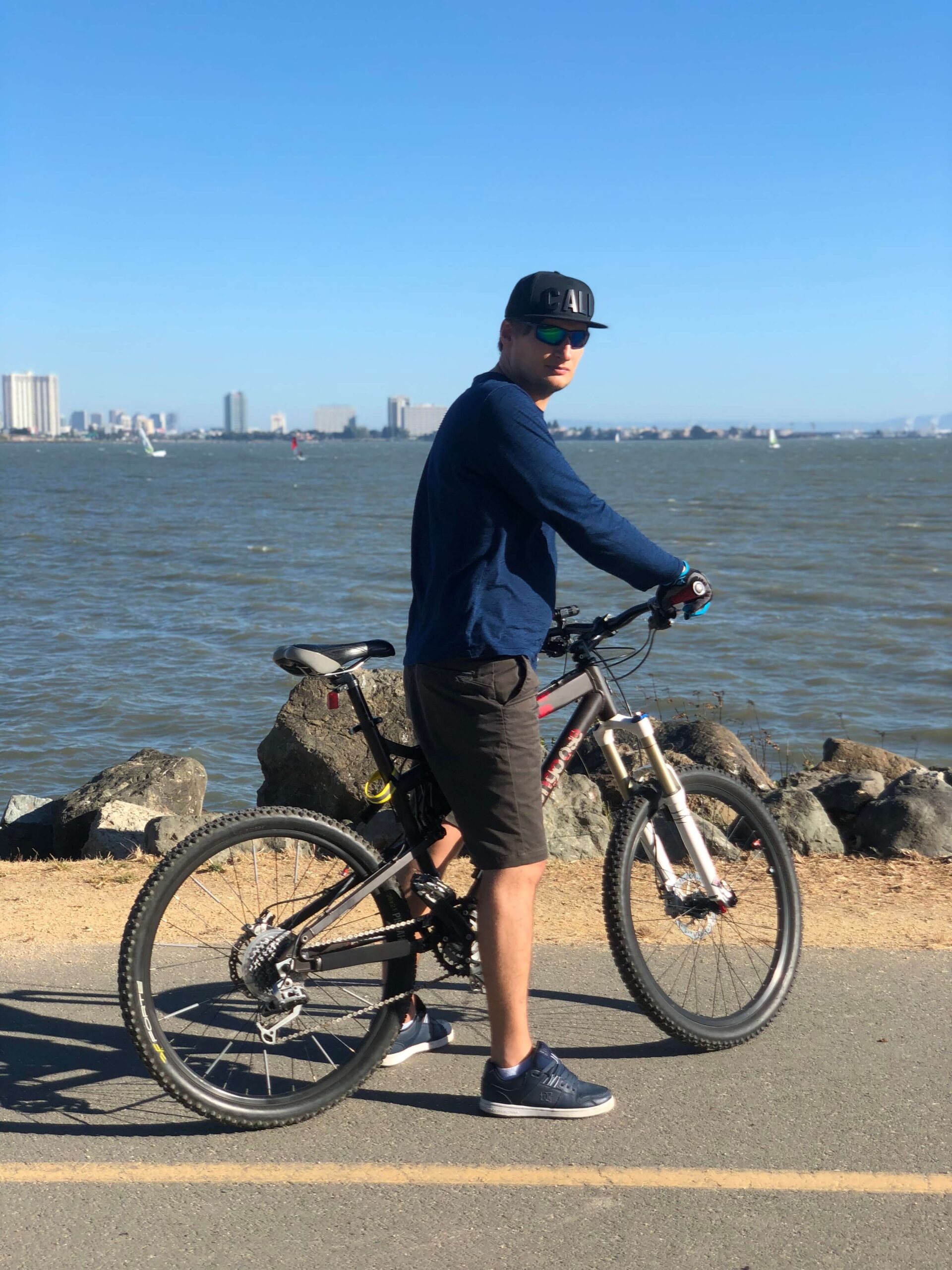
Looking back at this photo from the Bay Area, I realize that my time on the bike wasn’t a distraction from my work. It was the only thing that made my work sustainable. I have come to view physical exertion not as “leisure,” but as a critical maintenance protocol for the most expensive asset in my portfolio: my own mind.
We spend millions auditing our code and structuring our holdings, yet we often run our personal biological “hardware” into the ground. This is a fundamental calculation error. Here is why the saddle is just as important as the boardroom.
The Mental Defragmentation Protocol
There is a law of diminishing returns in intellectual work. After a certain number of hours, your decision-making quality drops, but your anxiety increases. You end up staring at a spreadsheet, moving the same numbers around without seeing the solution.
I have found a specific ROI in cycling that defies standard time-management logic: One hour on the bike often saves me ten hours of unproductive screen time.
When I ride, I am not “exercising”; I am defragmenting my mental hard drive. The repetitive physical motion acts as a background process that clears the cache of the day. It removes the noise, the petty frustrations of email, and the short-term fires. When I return to my desk, the solution that was invisible an hour ago is suddenly obvious. I don’t need more time; I need more clarity.
The Biochemistry of Capital Allocation
We like to believe that investment decisions are purely mathematical. We analyze the yield, the risk, and the market trends. But the truth is, every decision is filtered through your biology. You cannot act as a “Capital Architect” if your internal chemistry is compromised.
If your cortisol (stress) is spiking and your dopamine is depleted, your perception of risk becomes warped. You become either too reckless (seeking a dopamine hit) or too conservative (paralyzed by cortisol). I view sports as a tool to manually regulate this chemistry.
I use the bike to engineer the state of mind required for high-stakes negotiation:
- Cortisol Flush: burning off the stress of the previous week.
- Endorphin Release: creating a natural state of optimism and resilience.
- Oxygenation: fueling the prefrontal cortex for complex logic tasks.
Before I sign a deal, I ensure my biology is an ally, not a saboteur.
Meditation in Motion: The Solitude of the CEO
Leadership is, by definition, a lonely profession. You can have co-founders and advisors, but the ultimate weight of the decision rests on your shoulders alone. While many preach the benefits of team sports, I have always preferred the solitude of the trail.
I have never been able to meditate sitting in a lotus position in a silent room. My mind is too active. For me, meditation requires motion. The monotonous, rhythmic rotation of the pedals becomes a mantra. It induces a “flow state” where the conscious mind shuts off, allowing the subconscious to work on complex architectural problems.
On the bike, I am alone with my thoughts, the wind, and the road. This solitude is not isolating; it is empowering. It teaches you that you are responsible for your own momentum. If you stop pedaling, you fall. If you want to climb the hill, you have to do the work. There is no one to blame but yourself. This is the ultimate training for “Extreme Ownership.”
The “Zoom Out” Effect: Escaping the Matrix
Look at the background of this photo. You see the skyline of the city, the offices, the “Matrix” where we spend 90% of our lives. Inside those buildings, a missed deadline feels like a catastrophe. A difficult client feels like the end of the world.
But when you are out here, on the edge of the water, the scale changes.
This is the “Perspective Shift.” Physical distance creates mental distance. When I look at the tech hubs from the saddle of my mountain bike, they look small. The problems that seemed insurmountable in the morning now appear manageable.
You cannot solve a problem with the same mindset that created it. Sometimes, the only way to fix a strategic error in the boardroom is to physically remove yourself from the building, ride to the top of a hill, and look down at the maze from above. Only then can you see the exit.